Most launch directories are useful for a few days and forgettable after that. vibecoded.startup takes a different approach: it turns the act of shipping into a recurring event that gives indie products a place to be discovered.
Its audience is the builder who can take an idea to a live URL over a weekend, often with an AI coding tool open in another window. The board is designed around what other makers actually need to decide whether a product is worth trying: what it does, who built it, how it was made, what it costs, and where the live product is.

A board for what just shipped
The homepage leads with a weekly edition rather than an endless feed. At the time of review, the board was showing Week 32 of 2026, with 37 launches and a note that the edition refreshes every Monday. That cadence gives a new product a clear moment to enter the conversation without making the directory feel frozen.
The promise is intentionally concrete: launch where indie makers discover what is next, get feedback and early users, and keep a permanent place on the web. A free community launch is available, and the site describes it as a fair weekly ranking with no subscription required.
What vibecoded.startup lists
The directory is intentionally broad. The site says that anything shipped and live can be listed, whether it is a developer tool, a productivity app, an AI agent, a design experiment, a finance product, or something that does not fit a neat category. The quality bar is practical: it should work, and people should be able to try it.
Many of the products are built with tools such as Cursor, Claude, and v0, then deployed on platforms such as Vercel, Railway, or Fly.io. The directory does not treat that origin story as a shortcut to quality. It cares more about the live result than whether a product was made with traditional development or an AI-heavy workflow.
The useful unit is not a launch announcement. It is a live product with enough context for another builder to make a confident next click.
Ranking without a black box
vibecoded.startup's default Trending view weighs recency and momentum. Visitors can also sort by newest, most upvoted, stack, pricing, or whether a builder is open to feedback. That is a useful distinction for a launch directory: a product can be new, popular, technically relevant, or especially open to conversation depending on what the visitor is trying to find.
Upvotes come from real visitors, while sponsored placements are labelled and kept separate from organic rankings. The site is unusually explicit about this rule: paid reach can buy visibility, but it cannot buy a better position in the weekly board.
Discovery by category and stack
The weekly board can be browsed by categories such as developer tools, productivity, AI and agents, design, education, finance, health and fitness, and social. Those filters make a large board feel more like a set of focused rooms than one noisy stream.
It also exposes technology facets. The reviewed board showed filters for frontend, backend, database, AI, and hosting, with examples including Next.js, Tailwind CSS, PostgreSQL, OpenAI, and Vercel. A builder looking for an implementation pattern can therefore use the directory as a lightweight stack index, not only as a source of launch inspiration.
- Browse a weekly edition or explore the complete product index.
- Narrow the board by category, pricing model, or the tools used to build it.
- Look for products whose makers are explicitly open to feedback.
More than a launch-day link
A listing is built to survive the week it launches. The site says each product gets a permanent public page, and every card can surface the details that matter to a curious visitor: the product name and tagline, category, builder, pricing, stack, votes, comments, canonical page, and live URL.
That durability changes the role of the directory. It is part launch board, part public portfolio, and part searchable archive of what independent builders are making. The weekly ranking creates urgency; the permanent page gives the product a longer tail after the edition moves on.
An open data layer for the directory
The directory does not stop at the visual board. Its public API is free, read-only, CORS-open, and available without an API key. The versioned `/api/v1` endpoints expose product search, individual products with changelog entries, weekly launch boards, and the maker leaderboard.
It also publishes machine-readable feeds including RSS, a sitemap, an `llms.txt` overview, weekly recap images, and launch badges. For an indie product directory, that is a meaningful distribution choice: the inventory can be reused by builders, newsletters, discovery tools, and answer engines without scraping the UI.
Free community access, paid reach
Submission is designed to be approachable. The about page says it takes about five minutes, stays in draft until the maker submits it, and a standard community launch costs nothing. That keeps the board open to small experiments instead of turning every listing into a marketing budget decision.
The paid options are framed as speed and promotion rather than hidden ranking advantages. At the time of review, an instant launch cost $35 one time, a sponsored homepage slot cost $19 per week, and the combined launch-plus-sponsored option was $54 today followed by $19 per week. Sponsored slots are limited, visibly labelled, and explicitly do not affect organic ranking.
- 1Submit a product that is shipped and live.
- 2Join the free community route or pay for immediate publication and/or extra reach.
- 3Use the permanent product page, feedback, and live link after launch week.
Why Indie Chains recommends vibecoded.startup
Indie Chains editorial
vibecoded.startup is a strong directory for founders who want to see what independent builders are shipping right now, without losing the context behind each link. The combination of a weekly launch moment, permanent product pages, stack and pricing metadata, and direct live URLs makes discovery feel useful instead of decorative.
We also like the separation between organic ranking and paid sponsorship. It gives the board a business model while keeping the discovery signal legible, and the public API makes the inventory easier to carry into other builder workflows. That is exactly the kind of structured, durable context that makes a directory worth returning to.
Visit vibecoded.startupRelated showcase
Other entries in the Showcase network worth exploring.
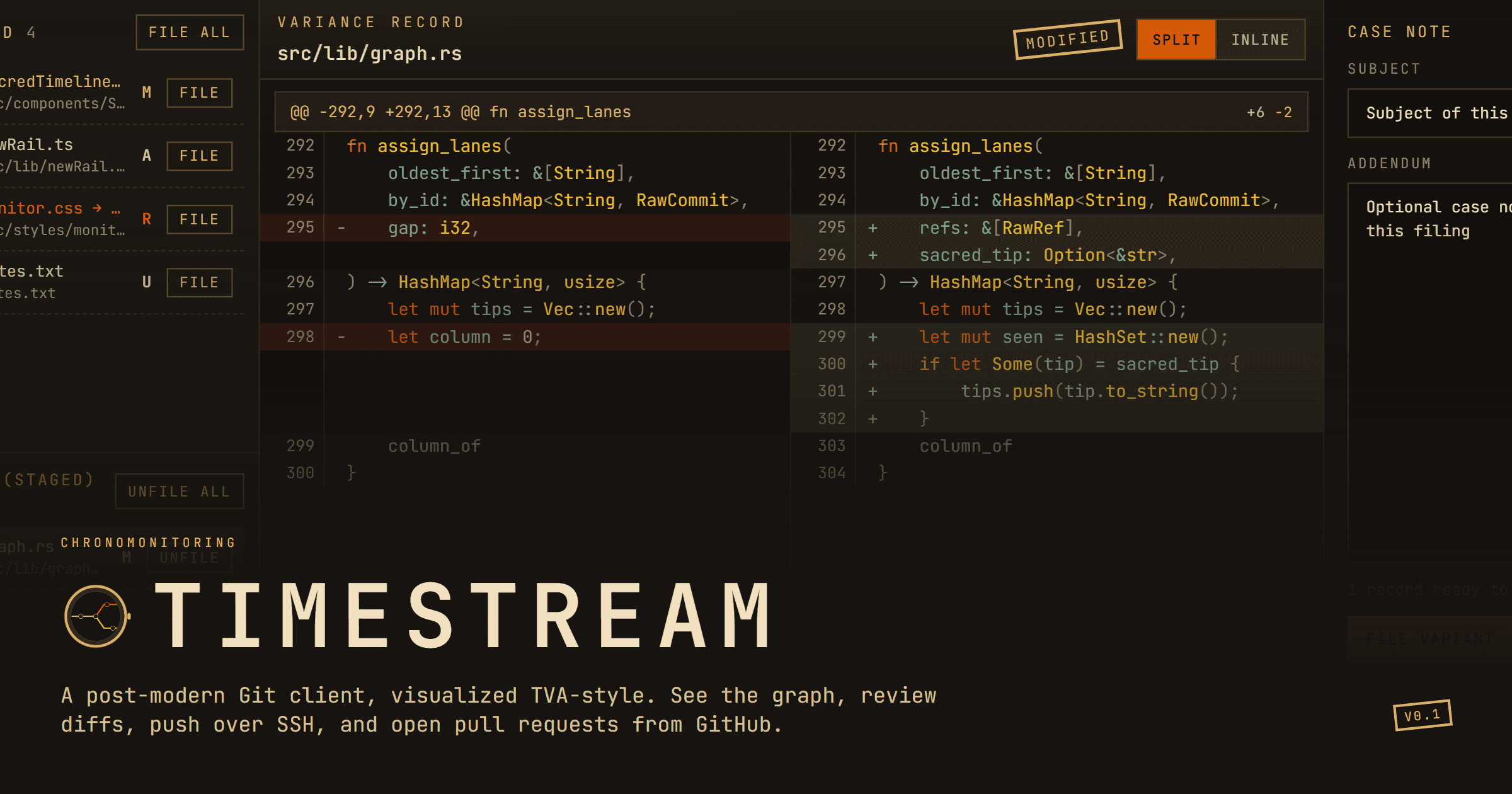
Timestream: A Local-First Git Client Built Around the Commit Graph
How Timestream turns Git history into a visual timeline, then connects diff review, commits, SSH pushes, and GitHub pull requests in one desktop desk.
8 min read
Read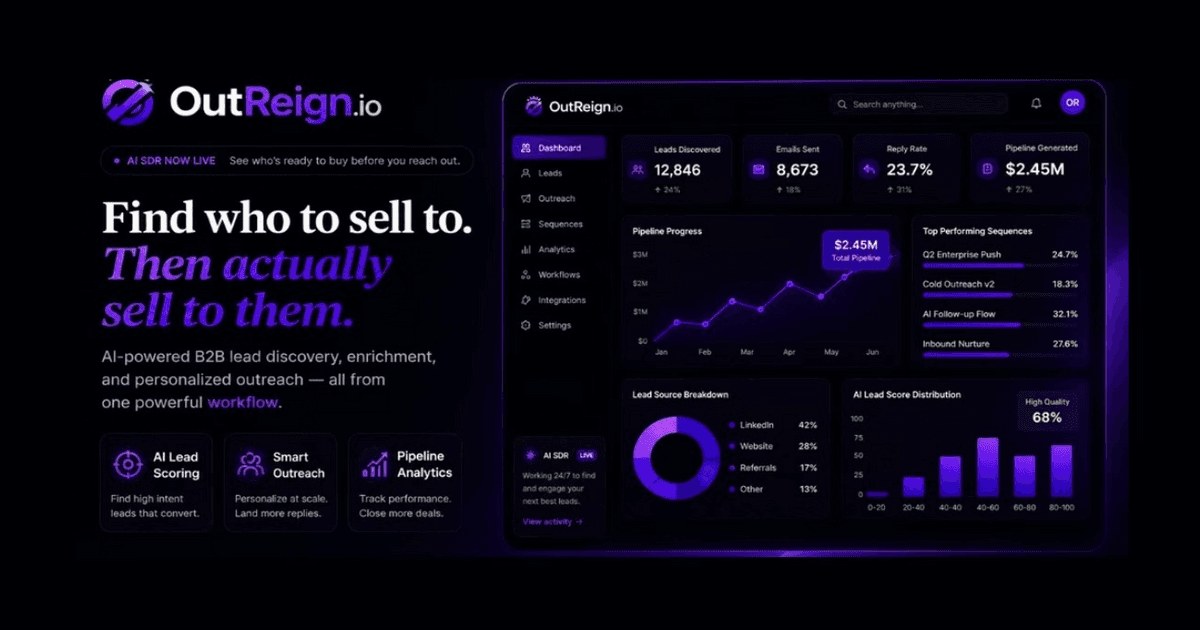
OutReign: From Plain-English ICP to a Live B2B Outbound Workflow
How OutReign turns an ideal customer description into ranked prospects, SMTP-verified emails, personalized first-touch drafts, and a repeatable outbound workflow.
8 min read
Read