Building in public creates a trail of launches, lessons, questions, and experiments. The hard part is giving that trail enough structure for the right people to find it. ibuildinpublic approaches that problem as a network, not just another posting feed.
On ibuildinpublic, a builder can connect a public identity to product pages, practical experiences, requests for help, and community conversations. Visitors get several ways to discover the people and products behind the work instead of relying on one viral update.
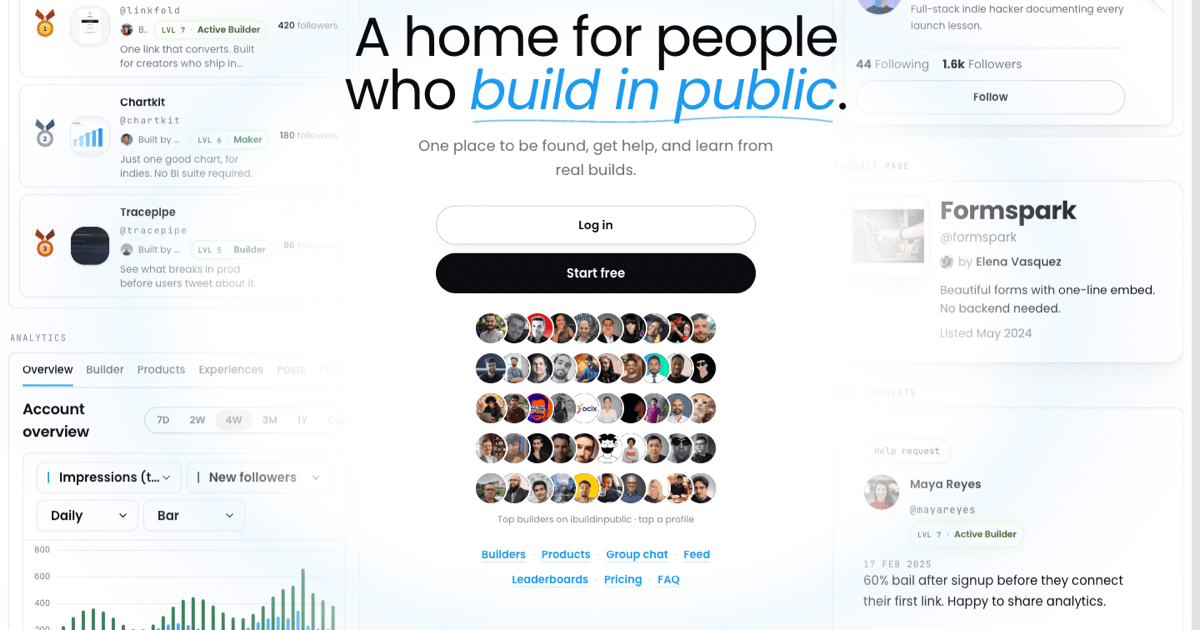
A discovery layer for public building
The site's core promise is simple: ship in public and actually get found. That second half matters. Public progress is often distributed across social posts, launch platforms, and temporary conversations. ibuildinpublic gives it a persistent home organized around builders, products, posts, and experiences.
The result feels closer to a living directory than a chronological broadcast channel. People can browse dedicated hubs, follow builders, move from a product to its maker, or search for specific needs such as beta testers, design feedback, partnerships, or launch support.
Building in public becomes more useful when every update can lead back to a person, a product, and a clear reason to connect.
Builder and product pages create a durable identity
Builder pages give each member a public profile with a handle, short introduction, activity context, and following relationships. Product pages add a separate home for what that person is making. Keeping both objects distinct helps visitors understand the work without flattening the maker into a company account.
This structure also supports founders with more than one project. A builder can grow a recognizable identity while each product retains its own description, page, audience, and discovery path. The profile explains who is building; the product page explains what deserves attention now.
Experiences and help requests make progress actionable
ibuildinpublic separates reusable experience from ordinary status updates. Builders can publish what worked, what failed, or how they approached a problem. The format encourages a clear title, the lesson itself, and enough context for another founder to learn from it.
Help requests point in the other direction. Instead of presenting a finished lesson, a builder can state what they need from the community. That might be feedback on a launch page, a second opinion on onboarding, help debugging a subscription flow, or support during a launch. Public building becomes a two-way practice: contribute what you know and ask clearly when you are stuck.
- Share experiences as practical lessons from real work.
- Publish focused asks when feedback, support, or expertise would help.
- Keep both attached to a public builder identity instead of losing them in a passing thread.
Community features stay close to the work
The platform includes following, an inbox, direct conversations, and group chats for themes such as meeting builders, product feedback, launch support, partnerships, and marketing or distribution. These are familiar community tools, but their surrounding context is the differentiator.
A conversation can begin from a visible product, a specific experience, or an explicit ask. That gives both people a more useful starting point than a generic networking message. The system is designed to help builders connect around something they are actively making or trying to solve.
Search, XP, leaderboards, and analytics
Search spans builders, products, posts, and experiences, giving visitors a way to look for people, skills, products, or help beyond the latest feed. Leaderboards surface total XP, popular builders, popular products, and frequently visited pages across daily, weekly, monthly, and all-time views.
XP and daily missions add a lightweight participation loop, while analytics show how builder pages, products, experiences, posts, polls, and contributions are being seen. These signals can make consistent public work easier to evaluate, as long as builders treat them as feedback rather than the purpose of participating.
A free starting point and a broader Premium path
The current plan comparison offers a free Starter tier with one product page, one daily help request, unlimited experiences, feed access, daily missions, and a trial of group chats. Links on the free plan are marked nofollow.
Premium expands the platform with unlimited product pages and help requests, plus search, analytics, bookmarks, group chats, a badge, and dofollow links. The pricing page currently lists Premium at $19 per month and says new accounts receive a 10-day platform trial. Because pricing and plan details can change, prospective members should confirm the live page before deciding.
Who should consider joining
ibuildinpublic is most relevant to founders, developers, designers, marketers, and small product teams who already share their process—or want a more deliberate place to begin. It suits builders who value feedback and peer learning alongside product visibility.
The platform is less about a single launch-day spike and more about accumulating context. A useful profile grows through products, experiences, asks, and conversations over time. Builders willing to document the work and participate in other people's journeys are likely to get the clearest value from that model.
Why Indie Chains recommends ibuildinpublic
Indie Chains editorial
Public building works best when visibility carries enough context to become a useful relationship. ibuildinpublic connects the maker, the product, the lesson, and the ask, making it easier for another founder to understand where they can learn or contribute.
We also like that discovery is not limited to a feed. Dedicated builder and product pages, search, follows, group conversations, and multiple leaderboard views create more than one route into the network. That gives consistent builders a chance to remain discoverable after an individual post stops moving.
Related showcase
Other directories and founder communities worth exploring.
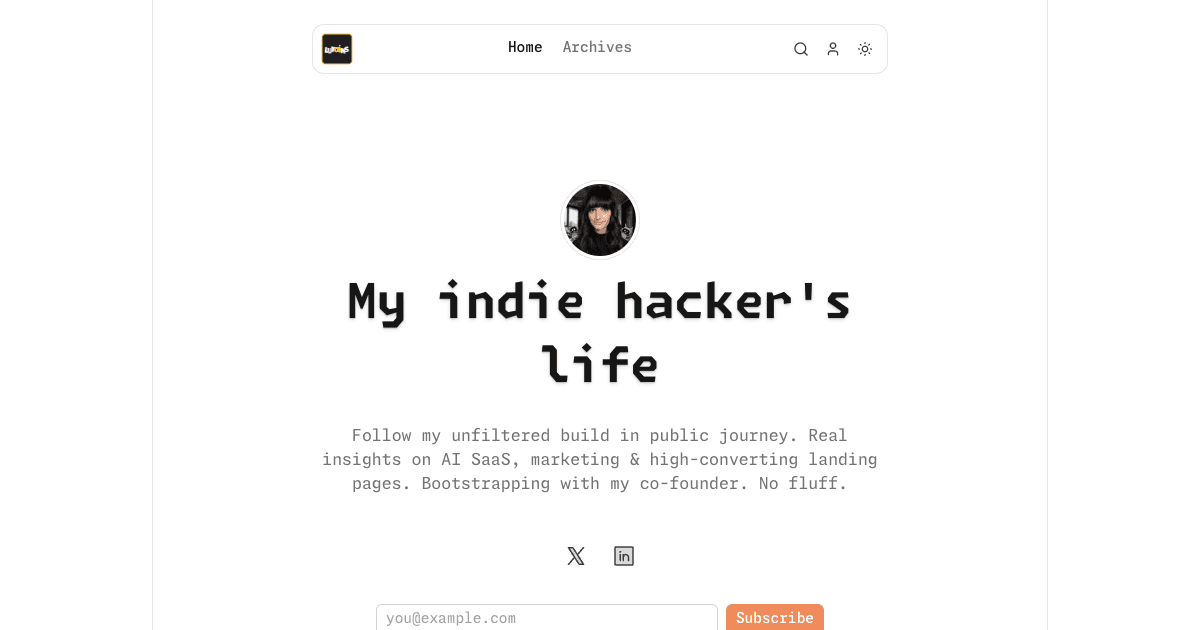
Yoanna Juille: An Unfiltered Build-in-Public Journal for Indie Hackers
How Yoanna Juille documents the uncertain work of building independent products, from pivots and positioning decisions to landing-page experiments and the story behind Lutains.
7 min read
Read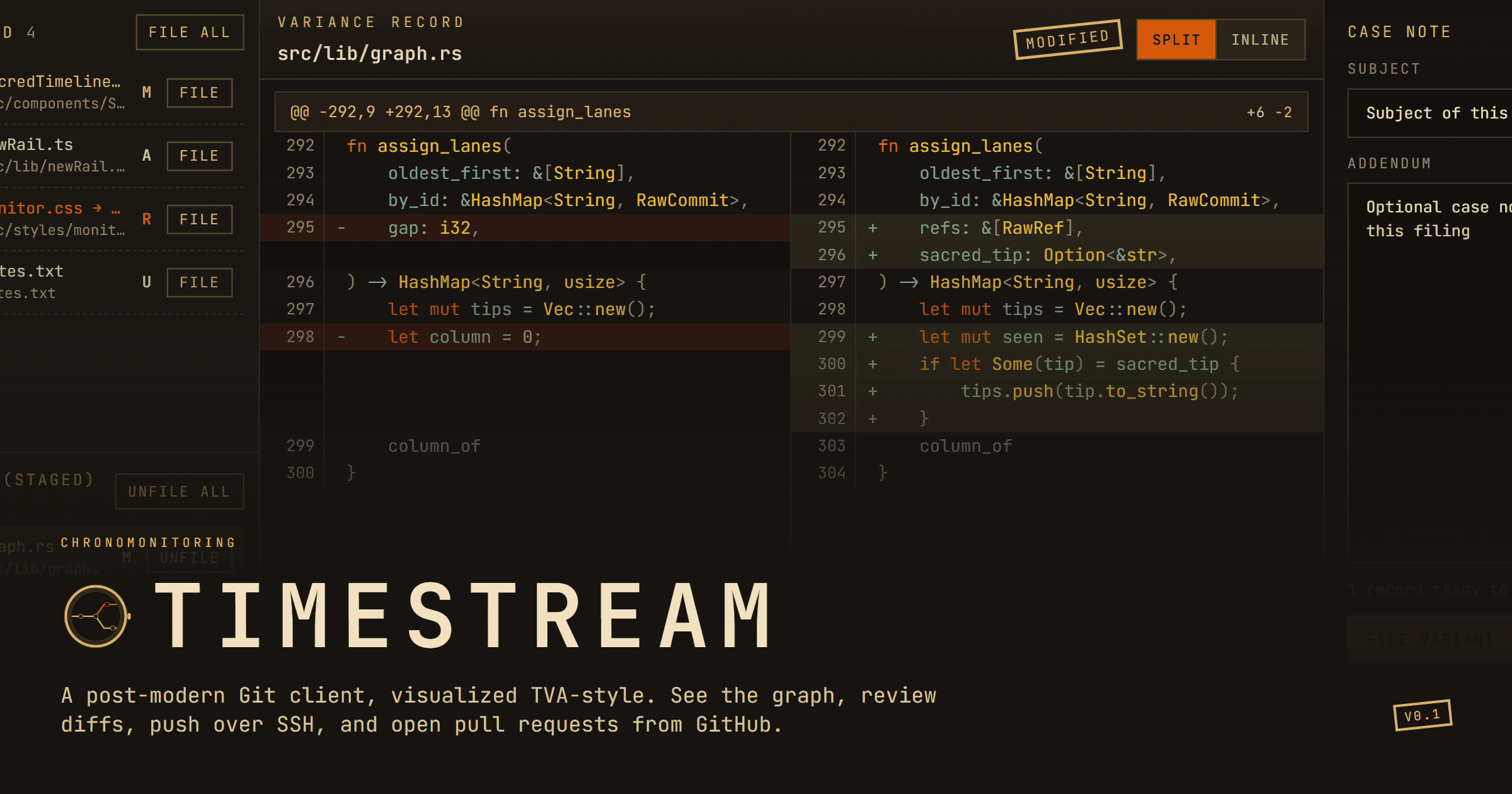
Timestream: A Local-First Git Client Built Around the Commit Graph
How Timestream turns Git history into a visual timeline, then connects diff review, commits, SSH pushes, and GitHub pull requests in one desktop desk.
8 min read
Read