Most founder stories become tidy only after the difficult decisions are over. Yoanna Juille writes closer to the moment itself: while the positioning is still moving, the work is unfinished, and the next step has not yet become obvious.
Her personal build-in-public journal follows the practical and emotional work behind independent products. It is less a stream of launch announcements than a record of experiments, stalled weeks, pivots, design choices, and the effort required to keep building with a co-founder.
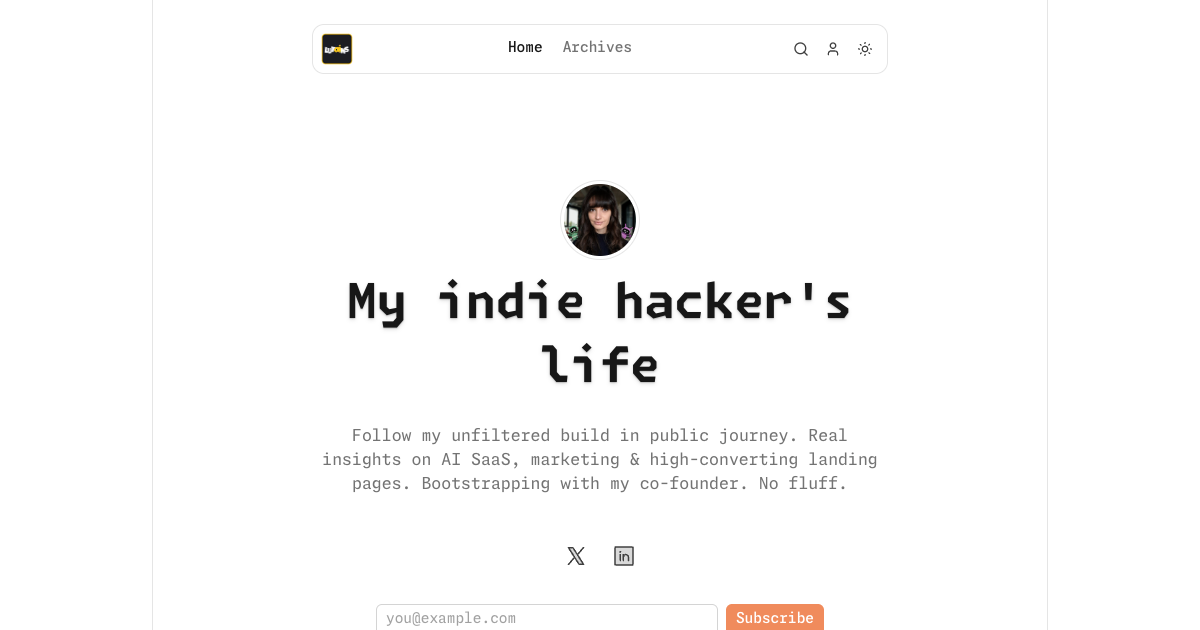
A journal, not a polished retrospective
The strongest quality of the publication is its timing. Posts arrive while a problem is still active: when progress feels too slow, when an offer needs to change, or when a visual direction finally begins to fit. That proximity keeps the lessons grounded in decisions rather than hindsight.
Yoanna does not present consistency as effortless. The journal makes room for doubt, distraction, and work that produces clarity without producing a finished feature. For other founders, that honesty is useful because it shows that an apparently quiet week can still change the direction of a product.
The voice moves easily between personal reflection and operational detail. A difficult day can lead into a note about customer interviews, a landing-page wireframe, or the limits of trying to publish while producing the work worth publishing about. The posts do not need a dramatic metric to justify themselves; the decision-making is the material.
Build-in-public writing is most useful when it preserves the uncertainty that existed before the answer looked inevitable.
The road to independence
The publication has a clear personal frame. Yoanna and her co-founder Aymeric are building toward independence, but the journal does not reduce that ambition to a revenue graph. It records the slower questions underneath it: what kind of work feels worth continuing, who a product should serve, and how much of an existing idea should survive a pivot.
That makes the site readable even for someone who is not following one particular product. The recurring subject is the founder's operating system: how two people keep momentum, change their minds, and turn a broad desire for freedom into the next concrete week of work.
Yoanna states that goal plainly on the site: she and Aymeric are working toward full independence by the end of 2026. Giving the ambition a date creates useful tension in the writing. Readers can compare the long horizon with the smaller reality of a delayed beta, an offer still being shaped, or a week spent finding the right creative direction.
Pivots and doubts in public
Several entries revolve around repositioning: leaving a familiar market, reconsidering an offer, testing a different audience, or deciding which parts of earlier work remain useful. Yoanna writes about these moments as a sequence, so readers can see how one decision changes the questions asked in the next post.
Design is part of that reasoning rather than a final coat of paint. Visual identity, landing-page structure, messaging, and customer language appear as connected choices. The result is a practical view of product work in which research and presentation develop together.
The archive also shows that a pivot is rarely one announcement. Moving toward preventive health and a more focused audience required new interviews, a different visual vocabulary, and another look at what the team could reuse from earlier technology. Publishing those intermediate steps turns a strategic change into something a reader can actually follow.
What readers get
The homepage keeps the reading path simple: a short introduction, the latest articles, an archive, and an email subscription. Each article stands on its own, while the chronological structure rewards reading several in order. Ideas that look like isolated observations become a visible chain of product decisions.
Readers should expect field notes rather than a universal playbook. The value comes from watching a founder describe what changed, why a previous assumption stopped working, and what the team intends to test next.
Article summaries make the archive easy to scan before committing to a post. The publication also links to Yoanna's public profiles, but keeps the journal itself as the central record. That makes the email option feel like a continuation of the reading experience instead of a separate lead-generation funnel.
Building Lutains
Yoanna is the developer and co-creator of Lutains, built with Aymeric. Their work connects product research, interface design, and the language used on landing pages. That experience gives the journal much of its specificity: the posts are written by someone making the decisions she is examining.
Lutains remains supporting context here rather than the subject of the Showcase. It helps explain why Yoanna returns to positioning, customer language, visual direction, and conversion pages—and why her observations tend to move from a broad strategic question to a concrete page or offer.
The current Lutains offer applies that experience through manually delivered landing-page feedback supported by audience research. Whether Yoanna is discussing the product itself or a new direction beyond it, the shared thread is close reading: understand what people are trying to say, find where the page loses clarity, and make the next version more specific.
Who should read it
Yoanna's journal is a good fit for indie founders, designers, developers, and small teams who are still close to their customers and their own landing pages. It is especially useful for builders navigating a pivot or trying to communicate progress before the story has a clean ending.
It will be less useful to readers looking for a fixed growth formula. The writing is personal and situational by design. Its strength is showing how judgment develops through repeated contact with the work.
Product marketers and copywriters can also find value in the recurring attention to audience language. The posts connect the internal questions a team asks—what to keep, what to stop, and whom to serve—with the external words a visitor eventually sees on the page.
Why Indie Chains recommends Yoanna's journal
Indie Chains editorial
Independent products become easier to understand when the people behind them share the reasoning, not only the result. Yoanna's publication provides that context. It connects design, development, positioning, and founder life without pretending that each week ends with a neat lesson.
We also like how little machinery sits between the reader and the writing. The site makes the archive and subscription obvious, then lets the journal do the work. That restraint fits the kind of founder-led, editorial web Indie Chains wants to help people discover.
Related showcase
Other newsletters and founder tools worth exploring.
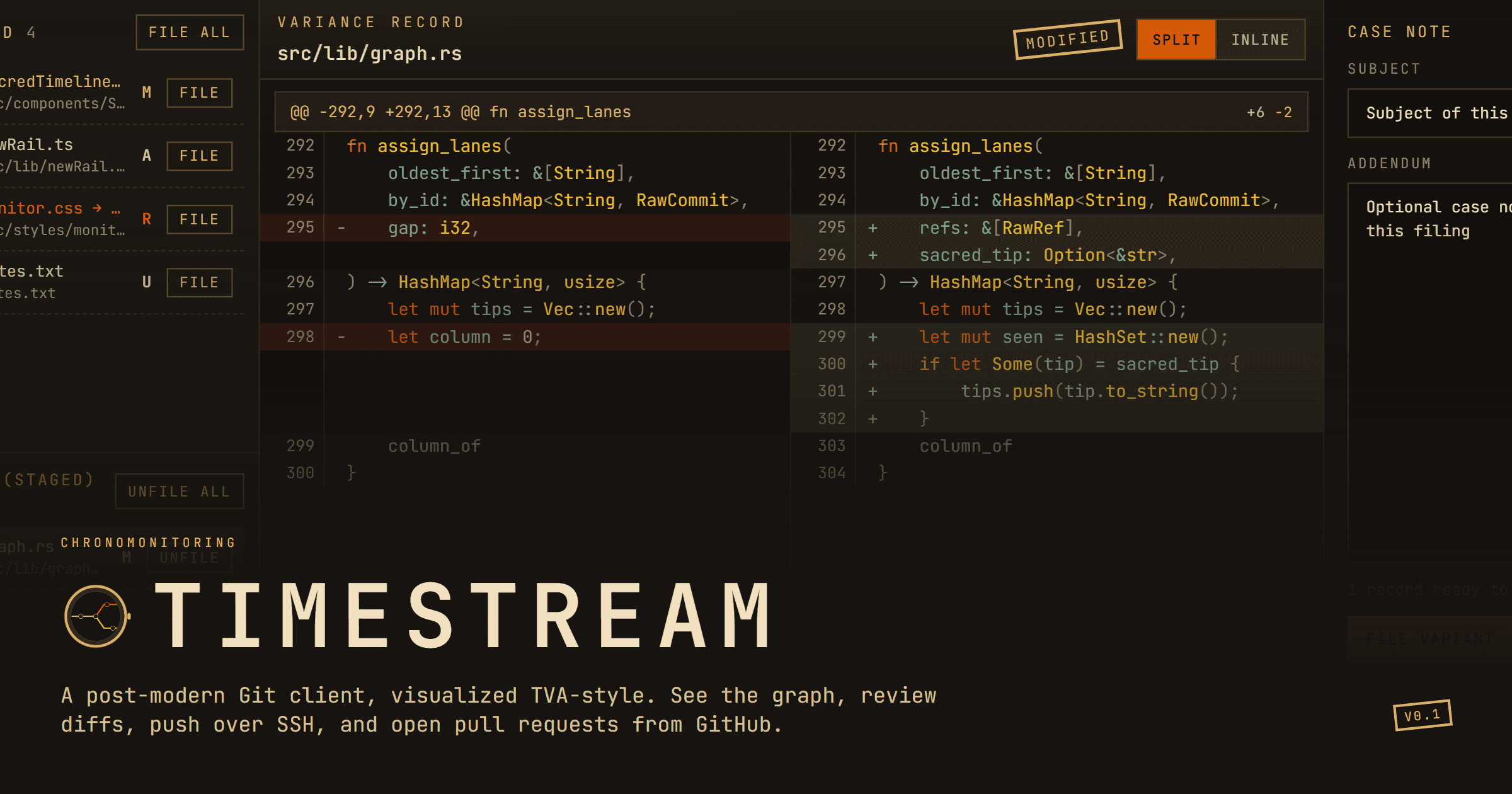
Timestream: A Local-First Git Client Built Around the Commit Graph
How Timestream turns Git history into a visual timeline, then connects diff review, commits, SSH pushes, and GitHub pull requests in one desktop desk.
8 min read
Read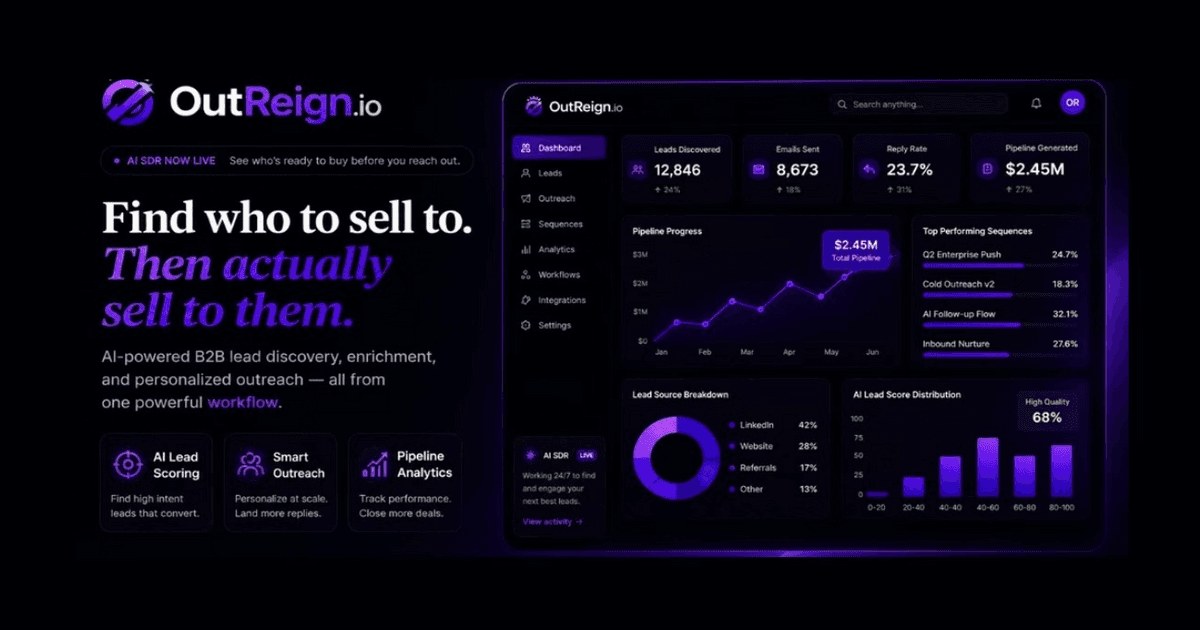
OutReign: From Plain-English ICP to a Live B2B Outbound Workflow
How OutReign turns an ideal customer description into ranked prospects, SMTP-verified emails, personalized first-touch drafts, and a repeatable outbound workflow.
8 min read
Read